About Watt48
A free, independent place to choose equipment for generating and storing electricity.
Watt48 lists portable power stations, solar generators, solar panels and generators with each maker’s published figures, puts two of a kind side by side, sizes a power station for the devices you run, and forecasts what a solar panel will make where it stands. It sells nothing itself: when you have chosen, a button takes you to the maker or to Amazon.
What you can do on Watt48
Six parts, built on one set of product figures, so a power station reads the same in the list, on its own page, in a comparison and in the calculator’s results.
- A product catalog
- Portable power stations, solar generators (a power station sold with solar panels), solar panels and generators, with filters for capacity, output, solar input, outlets, weight and price.Browse products
- A page for every product
- The photo, the key figures, every specification the maker publishes, the price with the day it was checked, the other ways the same product is sold, and where to buy it.See the product list
- A side-by-side comparison
- Two products of one kind, row by row. The better figure is marked wherever both makers publish it on the same terms, and the weighing is left to you.Compare products
- A power station calculator
- Works out the battery capacity, continuous output and startup surge your devices need, then ranks the power stations that fit, whether they recharge from solar panels, a generator, a wall outlet or an electric car.Open the calculator
- A solar forecast
- What a solar panel should make today and tomorrow, hour by hour, from its spot on the map, its tilt, the direction it faces and its rated watts.Open the solar forecast
- Guides and brand pages
- Plain explanations of how power stations and solar panels work, with the sums shown, and each maker’s lineup laid out model by model.Read the guides
What the calculator works out
Watt-hours alone undersize most setups. The calculator works out three separate numbers from your devices and how long they run, then checks real power stations against all three, plus the outlets each device needs.
- Battery capacity
- How much energy your devices use over the whole plan, including inverter losses, the inverter’s own idle draw, and the battery’s protected reserve.
- Continuous output
- The power a station has to supply for hours on end, sized with headroom so it never runs at its limit.
- Startup surge
- The split-second spike when a fridge, pump, or saw starts, often two to five times its running power.
Who it’s for
Work, everyday life, the outdoors, or something else entirely. In the calculator, the use case you pick decides which devices come first, a sensible runtime, and how much weight is reasonable to carry.
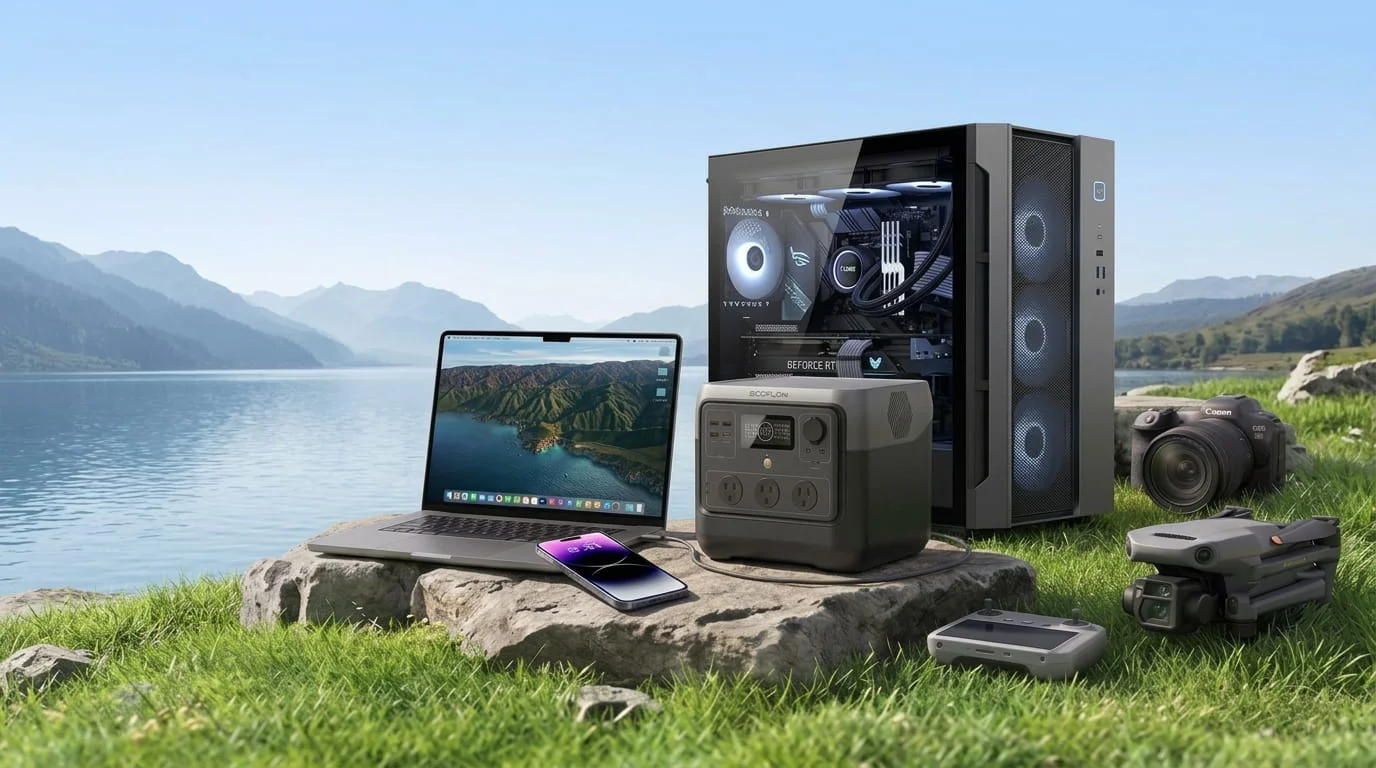
Electronics
Laptops, monitors, routers, and Starlink for a remote workday or a mobile office.
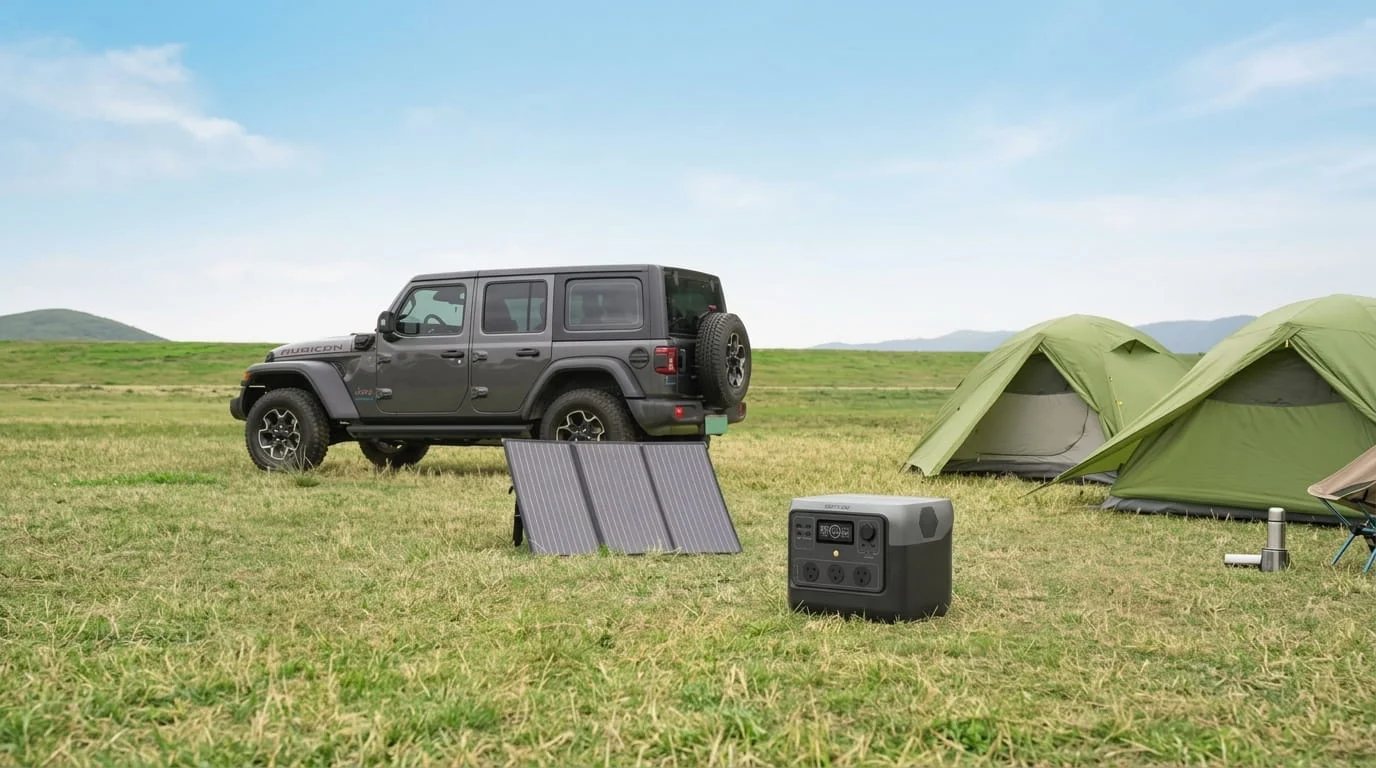
Outdoor
A car fridge, lights, phones, and cameras for camping, overlanding, and vanlife.

Work
Saws, drills, compressors, and battery chargers on job sites and remote shifts.

Home
The fridge, router, lights, and a CPAP through a power outage.
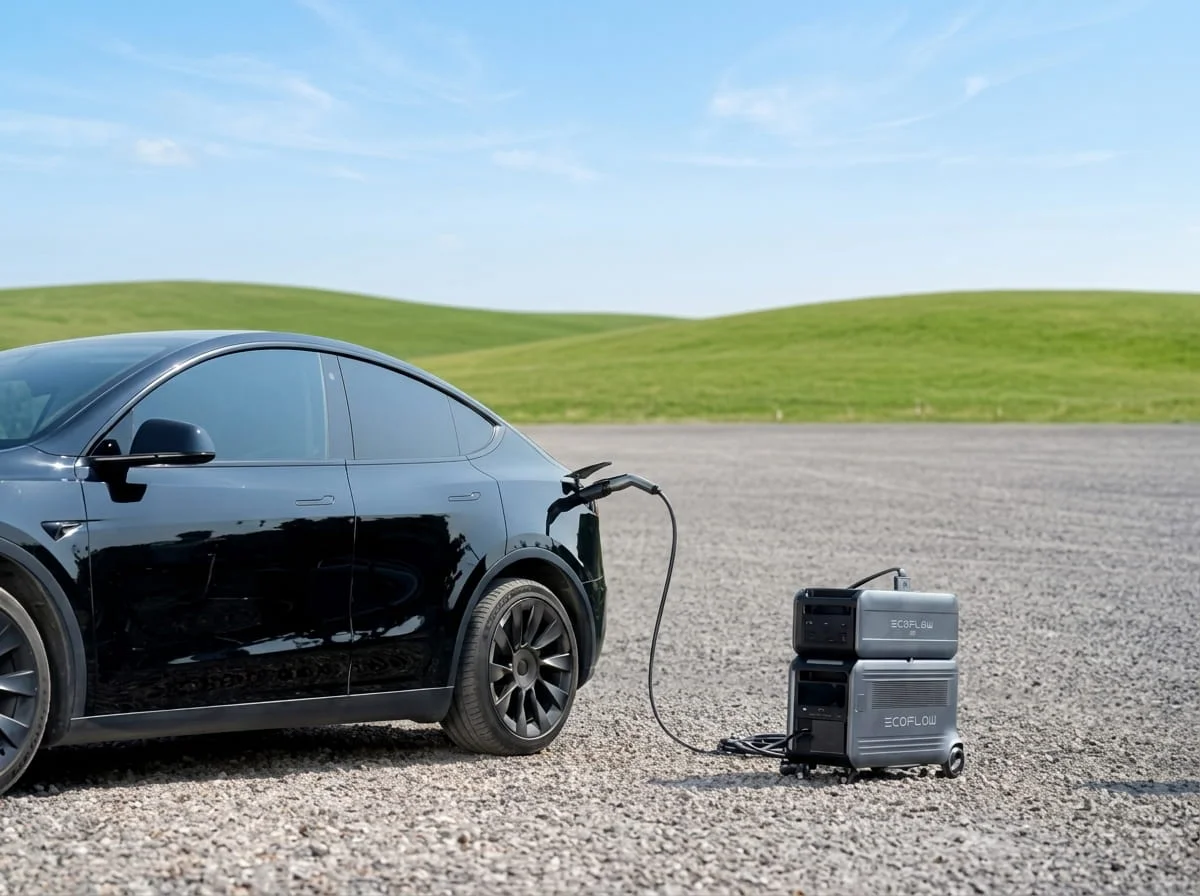
Other
EV top-ups, RVs, e-bikes, or any mix from the full device catalog.
How the calculator works
Five short steps. Your answers are saved in your browser as you go.
Use case
Choose what you’re powering for. It sets which devices come first and a starting runtime.
Devices
Tap what you’ll plug in from 46 common devices, or add your own. Every wattage can be edited, because your device’s label beats any default.
Usage
Say how long you need power, whether things run at the same time, and how cold it will get.
Recharge
Say how you’ll refill the battery. Choose portable or fixed solar panels and how much sun they get, a wall outlet, a generator and its fuel, or an electric car with a power outlet. Not sure yet shows every option that fits, and skipping the step sizes for the battery alone.
Recommendation
See the capacity, output, and surge you need, and the power stations ranked by how well they fit, with the reasons behind each.
What you can count on
Watt48 is built to give you figures and answers you can check for yourself, not a sales pitch.
- Independent
- Watt48 doesn’t sell power stations, solar panels or generators, and no maker or store pays to be listed. In the calculator, units are ranked by how well they fit your plan; price and brand never change the order.
- The makers’ own figures
- Every product specification comes from the maker’s specification sheets and manuals. A figure the maker doesn’t publish is shown as not published, and there are no star ratings or popularity scores.
- Every number explained
- In the calculator, each figure comes from your input, a product’s published specs, or a documented assumption, and the results page shows the math behind it.
- Headroom built in
- Loads that run for hours stay under 80% of the inverter, and the battery keeps 20% in reserve for aging and surprises.
- Straight answers
- When nothing in the list can run your setup, the calculator says so and tells you what would change that, instead of recommending a unit that won’t cope.
- Private by design
- No account, no sign-up, and no cookies. Your setup stays in your browser. Read the Privacy Policy.
Where the numbers come from
- Specifications, photos, and prices of power stations, solar panels, and generators come from the public GalaxyAX/power-station dataset. The site refreshes its copy every hour and checks each record before using it.
- Each price is the one on the maker’s own page for the product, in US dollars, shown with the day it was checked. The price on Amazon or in another store can differ.
- The solar forecast comes from Forecast.Solar, a weather-based forecast service, for the spot, tilt, and direction you set.
- Device wattages are typical values from generator wattage worksheets (Honda, Champion), US DOE and ENERGY STAR data, and manufacturer specs.
- The calculator’s sizing accounts for inverter efficiency and idle draw, the battery’s protected reserve, capacity lost in the cold, and the startup surge of motors and compressors.
- Missing specs are treated cautiously: a station without a published surge rating gets no surge credit beyond its continuous output.
Worth knowing
- The calculator’s results and the solar forecast are estimates for planning. Check the manufacturer’s specifications before you buy; the Terms of Use explain more.
- Each power station or bundle is recommended as it is sold. Batteries you could add later are listed as a spec, not suggested as a setup.
- The calculator models recharging from solar panels, from a generator and from an electric car’s power outlet, one at a time. Solar figures are for a typical day, and a cloudy one returns far less; generator figures assume it runs up to 6 hours a day; car figures assume it is plugged in up to 8 hours a day, and what the car itself gives up is an estimate. Only cars whose makers confirm an outlet are listed.
- From a wall outlet, the power station is charged in full once, before your plan starts, and its battery is sized to carry the whole plan by itself. For that choice only power stations sold by themselves are recommended, never a bundle.
- With “I’m not sure yet”, the battery is sized the same way, to carry the whole plan by itself, and every way of buying a power station is shown: by itself, or bundled with solar panels or a generator. What a bundle brings is checked against its power station but never counted.
- A comparison marks the better figure only where both products publish it on the same terms. It names no overall winner.
- Figures use US units and prices: pounds, degrees Fahrenheit, and US dollars.
Ready to choose?
Look through the products, or tell the calculator what you plug in and see which power station fits.